Posted 28th April 2026
Surfcasting in New Zealand | A Beginner’s Guide to Catching Fish From the Beach
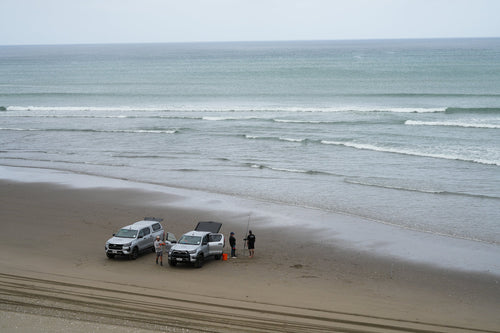
Surfcasting is one of the easiest and most enjoyable ways to get into saltwater fishing in New Zealand. We have an enormous amount of accessible coastline, from long sandy west coast beaches to sheltered eastern bays and South Island shingle beaches, and much of it can be fished with relatively simple gear. That is a big part of the appeal. You do not need a boat, electronics or a huge budget to get started, and a basic surf setup can put you in with a real chance of catching quality fish from the shore.
The variety is another reason surfcasting is so popular here. Depending on where you fish and the season, likely targets include kahawai, snapper, kingfish, gurnard, rig, elephant fish, school shark, trevally, and moki. Some sessions are about putting a feed together, while others are simply about reading the beach, enjoying the change of light and seeing what turns up. That mix of accessibility, challenge and reward is what keeps people coming back.

IN THIS ARTICLE
- Popular Surfcasting Spots in New Zealand
- Basic Surfcasting Gear
- Surfcasting Rigs
- Best Baits for Surfcasting
- Finding Where to Fish on a Beach
- Best Time to Surfcast
- Common Surfcasting Fish Species
- Surfcasting Safety Tips
- How Heavy Should Your Sinker Be?
- Hooks, Hook Sizes and Trace Strength
- How to Cast Safely and Efficiently
- Tides Explained for Surfcasters
- How to Look After Your Surf Gear
- Beginner Mistakes to Avoid
Popular Surfcasting Spots in New Zealand
Northland west coast
Northland’s west coast is iconic surfcasting country, with places like Ninety Mile Beach offering huge stretches of fishable water. Spring is a key time to dust off the surfcasting gear and chase the early snapper run, while summer through to early autumn is particularly good for snapper and kahawai. These beaches are well suited to anglers who are prepared to move, read the water and fish around the conditions.
Kaipara and Auckland’s west coast
Ripiro and the wider Kaipara-west coast area are well-known surfcasting regions. These beaches can produce kahawai, snapper and gurnard year round with a focus on spring snapper runs for good numbers of well conditioned fish. Late summer, autumn and settled winter periods are all worth a look too. The exposed coast means swell and sweep often dictate whether a spot is fishable.
East Coast Northland and Bay of Islands
The east coast generally offers more sheltered options than the west and is often a good place for newer surfcasters to start. Spring through autumn can be productive for snapper, kahawai and trevally, particularly around beach corners, harbour entries and current lines.
Coromandel
Coromandel has a wide range of beach and shoreline options, and its warmer-season fishing is especially popular. Snapper, kahawai and trevally are all realistic targets depending on the beach, with mobility often being the key because one side of the peninsula may be exposed while another is fishable.
Bay of Plenty and East Cape
This region offers open surf beaches, current-affected shoreline and productive river-mouth areas. Summer and autumn are generally reliable, with kahawai and snapper among the most common targets. Local conditions matter, but it is one of the better regions for anglers prepared to explore.
Taranaki and the lower west coast North Island
Taranaki surfcasting can be very productive when the swell allows it. Kahawai, snapper and sharks are common targets, and low light periods are often particularly good. Like many west coast fisheries, it rewards anglers who time their sessions carefully around wind and surf conditions.
Canterbury Bight and Kaikōura coast
Canterbury is one of the standout South Island surfcasting regions. Spring and summer are especially well known for elephant fish and rig, with school shark and gurnard also common in suitable areas. Gravel beaches, river mouths and lightly coloured water are all worth close attention.
Otago and Southland
Further south, surfcasters can encounter rig, school shark, kahawai and seasonal salmon opportunities. Summer is often the easiest time to start, but local knowledge is especially valuable in these regions because wind, weed and swell can change things quickly.

Basic Surfcasting Gear
Rods
For most New Zealand surfcasting, a rod in the 13ft to 14ft range is the standard starting point. That extra length helps with casting distance, line control over the shore break and keeping more line clear of the whitewater. It also makes it easier to hold bottom and manage your rig on open beaches.
For anglers starting out, Daiwa’s Emcast Surf is a very good entry-level option. It is built in 13ft and 14ft lengths with three-piece construction and a hi-viz tip for low-light visibility. If you want to step up in crispness and performance while staying in the accessible price bracket, the Laguna X Surf is another solid option. Beyond that, Daiwa’s current surf range also includes the 20 Sensor Wave Surf Rods, Sensor Surf Rods, and premium options such as the Cast Izm for anglers wanting higher-end casting performance.
Reels
A surf reel needs to cast cleanly, hold enough line, cope with salt and sand exposure, and retrieve smoothly under load. For many anglers, a 6000-size reel is a practical starting point, while dedicated surf models with longer-stroke spools become more attractive when casting distance becomes a bigger focus.
This is where LC (Long Cast) spools and long-stroke spool designs come into their own.
Nylon vs braid
Both nylon and braid work well for surfcasting, and both have clear advantages.
Nylon is forgiving. It has stretch, which helps absorb casting shock, and the lunges of fish in the wash. Mono line also helps your sinker to grip especially where there is strong current or sweep that is a constant strain on your line. It is generally easier for beginners to manage and remains very popular in NZ surfcasting for exactly that reason. Daiwa’s Shorecast Mono is an obvious fit for anglers wanting a purpose-built mono option. This Japanese manufactured mono is thinner per breaking strain than others which will help with casting distance and being red in color makes it more visible to see in the surf.
Braid is even thinner for the same breaking strain, gives better bite detection and can improve distance. The trade-off is that it is less forgiving, can be harder on the hands during powerful casts, and usually benefits from a shock leader setup. Anglers chasing more direct contact and lower line belly often prefer braid, while many others still favour nylon for its simplicity and controlled stretch.
Both lines should run 12-16lb with a shockleader for sandy beaches.
Other accessories
A few extras make a big difference on the beach: sand spike or rod holder, headlamp for low-light sessions, tip lights for night fishing, bait knife and scissors, shoulder pouch or bait board, towel and fresh water for cleaning up, and shock leaders for heavier casting. Daiwa’s Tapered Shock Leaders are well worth considering if you are casting heavier sinkers, using braid, or wanting to add a little more power in your cast without the concern that your line will break.

Surfcasting Rigs
Overview
You can catch a lot of fish in New Zealand with a small number of proven rigs. There is no need to overcomplicate things.
A two-hook dropper rig is one of the most common all-round choices. It is simple, effective, and lets you fish two baits at different positions, especially when you want a neat, stable presentation close to the bottom.
A pulley rig is a favourite when fishing rougher water, when you want better bait presentation or when you want fewer tangles on the cast. More distance-focused anglers also use clipped-down pulley rigs to make the rig more aerodynamic and improve bait security on the cast.
A running rig can work well in calmer conditions and lets fish move off with less resistance.
For most beginners, a two-hook dropper rig and a pulley rig will cover the majority of NZ surfcasting situations.

Best Baits for Surfcasting
Common bait options
Fresh bait consistently gives you the best chance, but there are plenty of proven baits that catch fish right around New Zealand. Common choices include pilchard, skipjack tuna, mullet, bonito, squid, anchovy and prawn – with Octopus being a standout as one of the most popular baits. Fresh fish strips are also very effective, especially for kahawai, snapper and gurnard. Don’t be afraid to try a few different combinations on the same hook especially mixing hard and soft bait together.
Unique New Zealand favourites
In many areas, shellfish baits such as tuatua, pipi and mussel are excellent and crayfish is a proven winner, while crab baits are well known for species such as rig and elephant fish.
Use bait elastic
A very good practical tip is to use bait elastic. It helps hold soft bait onto the hook, improves presentation, reduces wash-off in the surf, and makes the bait more aerodynamic on the cast. It is one of those small details that makes a real difference.

Finding Where to Fish on a Beach
What to look for
A key surfcasting lesson is that not all parts of a beach are equal. Good water usually matters more than maximum casting distance, and be prepared to shift spots with the tidal movements as the beach profile changes.
- Look for gutters, which are deeper channels running parallel to the beach. Fish often patrol these because food collects there.
- Rips and holes can also be productive, especially the edges where current meets calmer water. Watch the shape of the waves as well. If one section is breaking heavily and another is not, that quieter area may indicate deeper water.
- Colour changes are another clue, as slightly coloured water often means wave action is stirring up food. Structure such as shellfish beds, creek mouths, river mouths and reef edges can all hold fish too.
- A common beginner mistake is to stand in one place and blast a cast straight out. Quite often the better option is a shorter, more accurate cast into a visible gutter or edge.
- Other things to look for that can signify a great place to fish would be big patches of empty shells washed up on the sand and birds working chasing bait in behind the breakers.
Best Time to Surfcast
- Dawn – Dawn is one of the best times to fish from the beach. Water can be calmer, beaches are quieter, and many fish come in confidently under low light.
- Dusk – Dusk is much the same and is often excellent for snapper, rig and school shark.
- Night – Night fishing is also very productive. Many larger fish are more comfortable moving close after dark, particularly on clear or busy beaches.
- Bright daylight – Bright daylight is generally harder, especially on shallow, clear beaches, but it is still worth a crack. A bit of swell, colour in the water, wind chop or nearby structure can all improve daytime fishing. And even when the fish are quiet, daytime sessions are useful for learning how to read the beach.

Common Surfcasting Fish Species
- Kahawai – Kahawai are one of the most common and accessible surfcasting species in New Zealand. They show up on beaches, around river mouths and near bait schools, and they fight hard on surf gear.
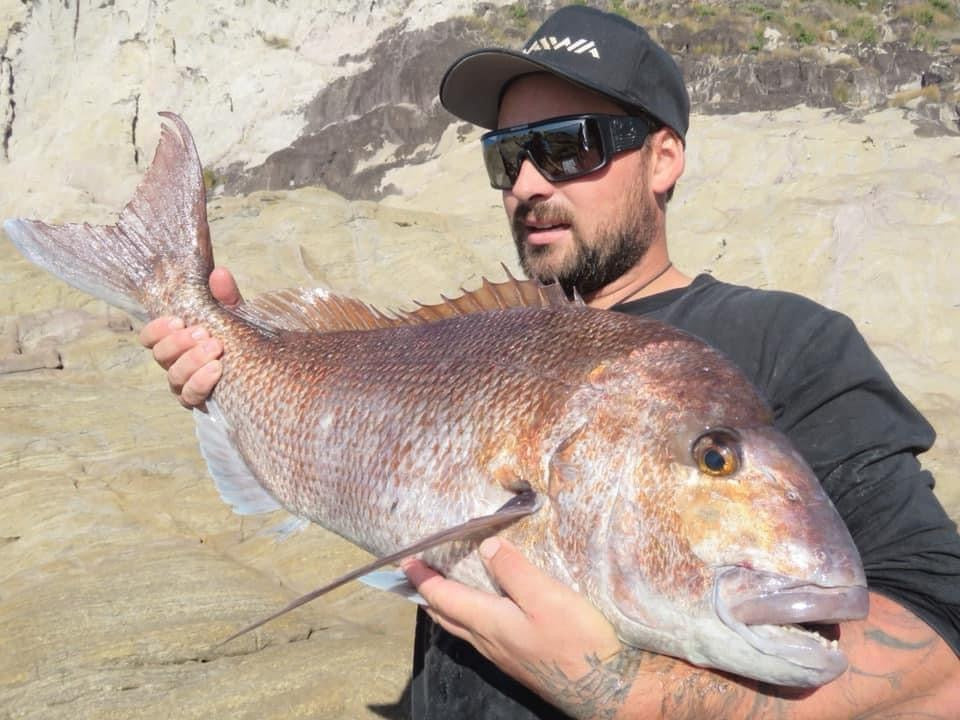
- Snapper – For many North Island surfcasters, snapper are the headline species. They are especially associated with northern and eastern beaches, but they also turn up on suitable west coast beaches when conditions line up. Low light, night sessions and oily baits are all part of the standard snapper surfcasting approach.
- Kingfish – Kingfish are often caught as exciting bycatch when slidebaiting, a technique that uses a larger live or fresh bait deployed beyond the breakers to attract powerful predators cruising the shoreline.
- Gurnard – Gurnard are a very realistic surfcasting target in many sandy-beach environments and are highly regarded on the table. They are often associated with lightly coloured water and fish well on simple bottom-presented baits.
- Rig – Rig are a specialist but very rewarding surf species. They are strongly associated with suitable South Island and lower North Island beaches and are particularly receptive to crab and shellfish baits.
- Elephant fish – A classic South Island surf species, especially around Canterbury. Spring and summer are key times, and shellfish or crab-style baits are among the standard choices.
- School shark – Common enough to be a regular capture on many beaches, especially when fishing bigger fish baits. They are widespread and often active around low light and after dark.
- Trevally – Trevally are less common than kahawai or snapper in many surf situations, but they are definitely on the list in northern and eastern regions. They can be fussy, so neat small bait presentation helps.
- Moki – Blue moki are a quality target in some lower North Island and South Island areas where there is some reef or foul influence or an in-close shore break. Shellfish baits cast short in behind these shore breaks will be presented to fish cruising the impact zone looking for an easy meal.
- Salmon – Salmon make South Island surfcasting a bit different from the rest of the country. They are not an everyday beach target, but in the right regions and seasons they are absolutely part of the mix.

Surfcasting Safety Tips
Observe Before You Cast
Spend some time before you start fishing checking out the wave heights, sweep, rips and undertow.
Do not wear waders into the surf
They can seem practical, but surf beaches are unpredictable. Staying dry, light and mobile is generally the safer option.
Tell someone where you are going
Let someone know which beach you are fishing, when you expect to be back, and what vehicle you are in. That is simple but important.
Do not wade past a comfortable depth
You rarely need to stand deep to catch fish. Unexpected holes, sweep and breaking waves can knock you over quickly.
Be mindful of swell and changing conditions
A beach can change dramatically with tide, wind and swell. Check the forecast first and do not assume the beach will stay the same throughout the session.
Drive slowly on beaches
Soft sand, people, hidden channels and incoming tide all create risk.
Fish with a mate if possible
It is safer, and it also makes moving gear, landing fish and making decisions easier.
Respect local rules and limits
Always check the current fisheries rules for the region you are fishing.
How Heavy Should Your Sinker Be?
Choosing sinker style and weight
Sinker choice matters more than many beginners realise. Your sinker needs to cast well and then hold the rig in place once it lands. If it is too light, current and surf will roll it away from the strike zone. If it is too heavy, the sinker will overpower your rod which can equate to less distance and in some extreme cases a broken rod. Most rods will have a recommended cast weight.
First choice, the Breakout Sinker
On many NZ beaches, breakout sinkers are the standard choice because their wire grips help hold bottom in moving water. They are especially useful on exposed beaches or in strong sweep.
Ball or bomb sinkers can still work in calmer conditions or where you want a little more movement. As a practical guide, many surfcasters carry a selection from around 3oz to 6oz and adjust based on the beach and conditions.
The simple rule is to use the lightest sinker that still holds bottom properly.

Hooks, Hook Sizes and Trace Strength
Terminal tackle basics
Your hooks and traces need to match the bait, the conditions and the species you are targeting. Smaller hooks are better suited to shellfish baits, small strip baits and species with smaller mouths, while larger hooks suit bigger fish baits and species such as snapper, rig or school shark.
Many anglers like recurve or circle-style hooks because they tend to hook fish neatly once the rod loads up. Traditional J-hooks are still widely used too, particularly by anglers who prefer to strike bites themselves.
Trace strength matters because surf conditions are abrasive. Sand, shell, current and rough mouths all put pressure on your terminal tackle. Going too light often causes problems. For beginners, it is usually better to fish a sensible all-round trace strength with reliable knots rather than chase finesse.
How to Cast Safely and Efficiently
Casting basics
You do not need tournament-style casting to catch fish off the beach. In fact, a smooth and controlled cast is usually far more useful than trying to hit maximum distance every time.
Good surfcasting is about consistency, bait presentation and accuracy. A smooth casting motion loads the rod properly and sends the sinker and bait away cleanly. Overhitting the cast often results in poor direction, snapped traces or bait flying off. This is especially true with soft baits such as pilchard or shellfish.
Safety matters just as much as technique. Always check behind you before casting, especially on busy beaches. If you are casting heavier sinkers with real force, use a proper shock leader. A clean cast into the right gutter is almost always better than a huge cast into dead water.
Tides Explained for Surfcasters
Reading the tide
Tides do not automatically create fish, but they do shape how a beach fishes. They change the depth of gutters, move food around and influence how close fish are willing to come.
An incoming tide is often favoured because it floods low-tide structure and lets fish move onto fresh ground. Gutters and holes that looked empty at low tide can become prime areas once water pushes back over them. An outgoing tide can also fish well, particularly near river mouths, creek mouths and areas where bait is being drawn seaward.
Low tide is useful because it lets you read the beach. It is often much easier to spot gutters, shellfish patches, channels and holes when more of the beach is exposed. Then, when the tide comes back in, you already know where your best water is likely to be.

How to Look After Your Surf Gear
Maintenance
Surfcasting gear works in a harsh environment. Salt, sand and spray are hard on rods, reels and terminal tackle, so a little maintenance goes a long way.
After a trip, lightly rinse rods and reels with fresh water. The aim is to remove salt and grit, not force water into the reel. Wipe everything down, let it dry properly and inspect it before storing it. Rod guides are worth checking regularly because damaged inserts can quickly destroy your line.
Also keep an eye on line, traces, swivels and clips. If your nylon is getting rough or twisted, replace it before it costs you a fish. Do not leave knives, hooks and other metal accessories wet and salty in the bottom of a bag. A few minutes of care after each trip will keep your outfit fishing properly for much longer.
Beginner Mistakes to Avoid
- Casting too far – Beginners often assume fish are always a long way out. In reality, many fish are caught surprisingly close in around gutters, holes and whitewater edges.
- Fishing dead water – Not every part of a beach holds fish. Learning to identify productive water is more important than simply standing in the nearest clear patch of sand.
- Using old or poorly presented bait – Fresh bait usually outfishes old bait, and even good bait will not fish well if it is hanging loosely off the hook. Neat baiting and bait elastic helps a lot.
- Overcomplicating rigs – You do not need a dozen rig options. A couple of proven rigs, tied well and used properly, will cover most situations.
- Ignoring the conditions – Wind, tide, swell and sweep all affect how a beach fishes. The anglers who adapt usually do best.
- Neglecting safety – No fish is worth unnecessary risk. Surfcasting is a lot more enjoyable when you keep things sensible.

Summary
Surfcasting remains one of the most accessible and rewarding forms of fishing in New Zealand. Not only being a great family activity for all to share but it is very affordable to get into, suits a huge range of beaches around the country, and offers a genuine mix of species and fishing styles. Whether you are chasing kahawai on a summer evening, trying for your first snapper from the sand, or learning how to read a beach properly at dawn, the basics stay the same: keep your setup simple, use good bait, fish the right water and stay safe. If you have never given surfcasting a proper go, it is one of the best ways to experience what New Zealand’s coastline has to offer.

Check out these other Posts
See All
Surfcasting in New Zealand | A Beginner’s Guide to Catching Fish From the Beach
Surfcasting in New Zealand | A Beginner’s Guide to Catching Fish From the Beach
By: Kristy Field
Read Now